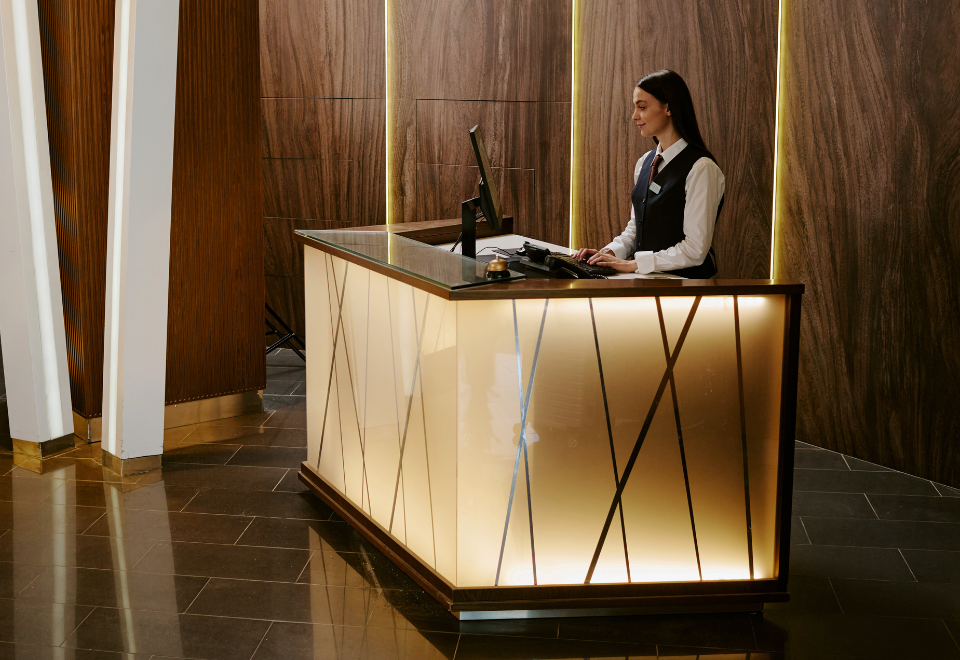
Hospitality is undergoing one of the greatest transformations in its history. For decades, luxury was measured in square metres, the shine of marble, and the exclusivity of service. Today, the concept has evolved. True luxury is no longer defined by what can be seen or touched, but by what can be felt. We have entered the era of experience — where the meeting point between human warmth and digital precision is redefining what it means to welcome.
The so-called intelligent hospitality is now a consolidated reality. It is present in the small details that make a stay smoother: multilingual virtual assistants, systems that adjust light and temperature according to the guest’s mood, instant check-ins, and personalised recommendations. Technology operates almost invisibly, yet its impact on the perception of hospitality is profound.
For a long time, technology and hospitality seemed like irreconcilable worlds. On one side, the emotional human touch; on the other, the cold precision of machines. Today, that boundary has disappeared. Digital tools no longer compete with people — they complement them. Repetitive tasks are handled by algorithms. Genuine care remains human.
Artificial intelligence has become a strategic ally of modern hospitality. It learns from patterns, anticipates preferences, and corrects errors before they become problems. The contemporary guest doesn’t just want good service; they want to be understood. They want to enter their room and find their favourite wine, the playlist from their last trip, and the perfect lighting for relaxation. This is the new level of personalisation: the hotel that truly knows its guest.
But intelligent hospitality is not limited to gadgets or futuristic interfaces. Its greatest value lies in the convergence between technological efficiency and human sensitivity. Automation should free time and energy so that the receptionist, concierge, or manager can offer what no machine can replicate — attention, empathy, and presence.
The luxury of the future is quiet and meaningful. It’s in receiving a message before check-in asking whether you prefer a feather or hypoallergenic pillow. It’s in discovering that the restaurant has prepared a lactose-free dessert because that detail was noted during your last stay. These discreet but memorable gestures create the kind of emotional bond that turns a guest into an ambassador.
The 21st-century luxury traveller has changed. They are more connected, informed, and conscious. They seek comfort, but also purpose. They value time and authenticity. They prefer service that is fast yet warm. Intelligent hospitality must understand this new profile and design experiences that combine efficiency and emotion — without letting one diminish the other.
This transformation is more than technological; it is cultural. It demands re-evaluating processes, redesigning teams, and rethinking the very concept of hospitality. Today, a hotel professional must master digital tools, cultivate empathy, and develop emotional intelligence. The tools may evolve, but what distinguishes a good stay from an unforgettable experience remains the same: human sensitivity.
Behind the scenes, data has become the new gold of hospitality. It guides decisions, personalises services, and increases profitability. However, modern luxury is also measured by transparency. Guests must trust that their data is handled ethically and used solely to enhance their experience — not to invade their privacy.
Sustainability is another central pillar of this new hospitality. Intelligent systems already allow hotels to monitor energy and water consumption in real time, reduce waste, and optimise operations. Some use sensors that automatically turn off the air conditioning when guests leave the room or adjust natural lighting according to outdoor brightness. It’s technology in service of environmental responsibility — a clear signal that luxury and consciousness can coexist.
In this context, concepts such as silent luxury and invisible hospitality gain strength. The first values the essential and enduring; the second, the power of discreet technology — the kind that doesn’t draw attention but ensures everything runs perfectly. It’s sophistication that doesn’t need to prove itself, because it can be felt in every detail.
Intelligent hospitality also opens new possibilities for connection. Personalised apps allow guests to communicate with the concierge in real time, make reservations, request services, or receive exclusive recommendations during their stay. Guests gain convenience; hotels gain data. And the system learns. It’s a virtuous cycle of continuous improvement.
However, there is a line that must not be crossed. Excessive automation can alienate. When human interaction disappears, the magic fades. Balance, therefore, is essential. Technology must be a bridge, never a wall. It should amplify connection, not replace it.
The future of hospitality is hybrid. Hotels that combine technological innovation with human warmth will stand ahead. Those that cling to purely mechanical or overly traditional models risk losing relevance. The traveller of tomorrow will choose destinations not just for the landscape, but for the experience they provide.
In the end, the essence of hospitality remains untouched: to welcome, care, listen, and create bonds. The difference is that we now have new tools to do it better. Luxury no longer lies in the shine of marble but in the spark of recognition — in the look of someone who anticipates what another person needs. It is there, between emotion and precision, that hospitality finds its new path.
The future of the industry will be shaped by those who can balance these two worlds — those who understand that hospitality is, above all, about people, yet that technology can amplify that relationship. Ultimately, true innovation is not the one that dazzles through form, but the one that moves through essence.